Part of the shrine of Queen Henhenet
A small shrine wall of Queen Henhenet carved with columns and a cornice: part of a painted limestone chapel built inside the temple of Mentuhotep II. Full commentary ↓
Couldn't load the puzzle image.
Turn on piece outlines to see piece positions on this picture too
Drag the pieces into place · When zoomed in, drag an empty spot to move around
You can also play with a keyboard — Tab to the board, thenSpace pick a piece, Arrow keys move it (with Shift for small steps),Esc deselect, R rotate a piece (Shift+R the other way)
Part of the shrine of Queen Henhenet is a stone object by an unknown maker (ca. 2051–2030 B.C.) in the collection of The Metropolitan Museum of Art.
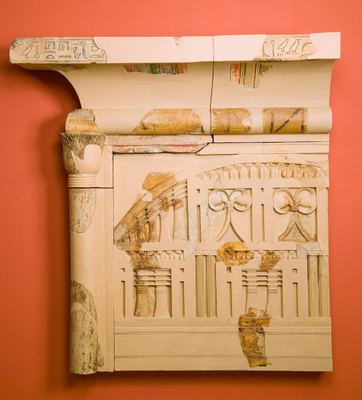
In the pictureThe wall and cornice of a small building made of pale limestone stand in front of a red wall. At the top are the curved decoration of the cornice and traces of paint; below, columns and a door shape are carved in relief, and at lower right traces of a figure remain. It is 1.2 meters tall.
BackgroundMentuhotep II built six small shrines for queens and priestesses inside his temple at Deir el-Bahri in western Thebes. This wall comes from Henhenet's shrine and pairs with her stone sarcophagus in the same museum. The columns and door carved on the shrine wall are a miniature version of a real building, and originally the whole thing was painted.
Puzzle tipThe red background and pale limestone separate clearly, so frame the wall first with its outline pieces. The curve of the cornice at the top and the straight vertical lines of the columns below are the next clues, and pieces with traces of paint can be checked against the preview. 48 pieces is about right.
- Period
- Middle Kingdom
- Dynasty
- Dynasty 11
- Medium
- Limestone, paint
- Dimensions
- H. 120 cm (47 1/4 in.); W. 114 cm (44 7/8 in.); D. 34 cm (13
- Credit line
- Gift of Egypt Exploration Fund, 1906, 1907
Source: The Metropolitan Museum of Art ↗
Stories about this work
- Mentuhotep II, Who Reunited a Divided Egypt, and Four Carved Works
A war record from just before reunification, a queen's stone sarcophagus, a shrine wall, and a later king's dedication. The story of a Theban king who made Egypt whole again, read through stone.