Ceremonial Coat
A ceremonial coat with gold-embroidered shoulders, zigzag-patterned silk and a full skirt finely pleated below the waist, recorded as dating from 1884 to 1890. Full commentary ↓
Couldn't load the puzzle image.
Turn on piece outlines to see piece positions on this picture too
Drag the pieces into place · When zoomed in, drag an empty spot to move around
You can also play with a keyboard — Tab to the board, thenSpace pick a piece, Arrow keys move it (with Shift for small steps),Esc deselect, R rotate a piece (Shift+R the other way)
Ceremonial Coat is a textile by an unknown maker (1884–90) in the collection of The Metropolitan Museum of Art.
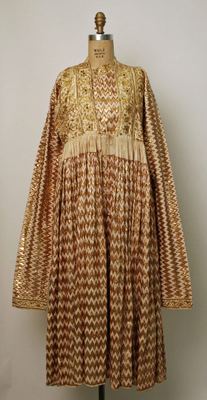
In the pictureA silk coat with a brown and cream zigzag pattern is dressed on a mannequin. Gold-embroidered panels cover the shoulders and chest, and below them a wide skirt, finely pleated from the waist, flares out to below the knees. The sleeves are long, with embroidered bands at the cuffs.
BackgroundThe date is recorded as narrowly as 1884 to 1890 because the history of how it was acquired is clear. The gold embroidery on the shoulders and the fine pleats below the waist are elements seen in the court dress of northern India, made so that the skirt spreads wide when the wearer walks or dances. The zigzag pattern is woven in.
Puzzle tipThe gold-embroidered shoulder pieces and the zigzag pieces can be told apart by texture. Fit the gold pieces at the shoulders and cuffs first, then place the zigzag pieces by the direction of the pattern and the vertical lines of the pleats. The mannequin's white neck pieces are a reference point. 100 pieces is a good fit.
- Classification
- Main dress-Menswear
- Medium
- Cotton, silk, and metal wrapped thread; embroidered
- Dimensions
- Overall:
- Credit line
- Purchase, Irene Lewisohn Bequest, 1979
Source: The Metropolitan Museum of Art ↗
Stories about this work
- From Kurta to Cloak: Six Garments from the Islamic World, Told Apart by Shape
Even within Islamic-world dress, a different shape makes an entirely different garment. Six pieces, from two kurtas to a doll-sized wedding dress, sorted by form.