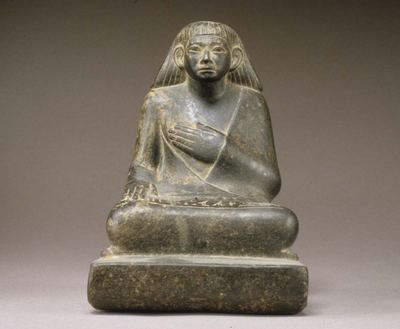
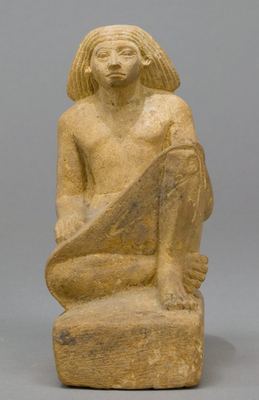
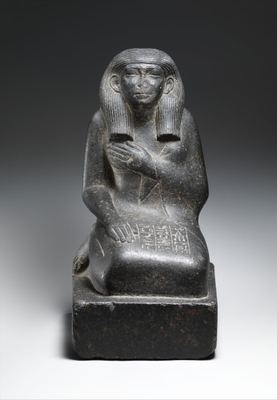
Statuette of Merer
A painted wooden figure of Merer with black hair and a white kilt, stepping forward on his left foot; a Middle Kingdom tomb figure with his name written on the kilt. Full commentary ↓
Couldn't load the puzzle image.
Turn on piece outlines to see piece positions on this picture too
Drag the pieces into place · When zoomed in, drag an empty spot to move around
You can also play with a keyboard — Tab to the board, thenSpace pick a piece, Arrow keys move it (with Shift for small steps),Esc deselect, R rotate a piece (Shift+R the other way)
Statuette of Merer is a wooden object by an unknown maker (ca. 1981–1802 B.C.) in the collection of The Metropolitan Museum of Art. It measures H. 23.5 cm (9 1/4 in.).
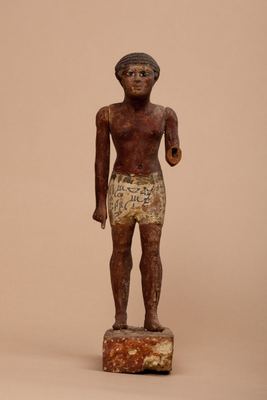
In the pictureA wooden figure painted reddish brown stands with short black hair and a white kilt, his left foot stepping forward. Black writing runs across the kilt; one arm hangs at his side and the other is broken off at the elbow. The eyes are painted in white and black, and the base is red stone. It is 23 cm high.
BackgroundThe same museum has four figures of this man named Merer, and all appear to come from the same tomb. Placing several statues of oneself in a tomb was meant to secure a place for the soul to dwell even if the body was damaged. The writing on the kilt gives his name and an offering prayer, and coating wood with plaster and painting it was cheaper and faster than working in stone.
Puzzle tipThe background is a plain apricot color, so the pieces along the figure's outline are the key. Fit the black hair, the white kilt, and the red base first, then place the brown body using the slender shapes of the arms and legs. 24 or 48 pieces suits it.
- Period
- Middle Kingdom
- Dynasty
- Dynasty 12
- Medium
- Wood, paint Gesso
- Dimensions
- H. 23.5 cm (9 1/4 in.)
- Credit line
- Rogers Fund, 1910
Source: The Metropolitan Museum of Art ↗
Stories about this work
- Four Wooden Statuettes of the Same Man, Merer, Side by Side
Four wooden tomb statuettes from Egypt's Middle Kingdom. They depict the same person, yet the pose, the paint, and even the color of the writing on the kilt differ slightly.