Online Jigsaw Puzzles vs. Printed Puzzles: When Is Each Better?
Published · updated
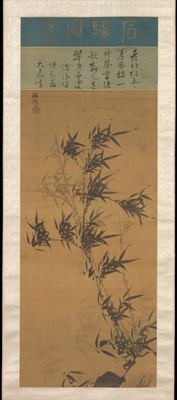
Even with the same Bamboo in the Wind, dragging pieces together on a screen and cutting them out of paper with scissors to spread on a table feel like doing entirely different things. Asked which is better, I can only say it depends on the situation. Listing pros and cons does not help much with choosing, so here is a look at what actually changes.
What the screen does for you
Online puzzles save your progress automatically. If you leave partway through, you can just pick up next time. There is no losing pieces, so the biggest headache of physical puzzles disappears. Zoom in and you can work while seeing every brushstroke, and there is no need to take over the dining table for weeks. Progress is saved in the browser on that device, so you cannot pick up on your laptop a puzzle you started on your phone.
The biggest difference is that you can solve the same painting in four sizes. You choose among Easy (about 24 pieces), Normal (about 48), Hard (about 100) and Expert (about 300). Because the grid is set to fit the proportions of the picture, the actual piece count differs a little from the label. Bamboo in the Wind, a very tall hanging scroll, is 3×7, or 21 pieces, on Easy, while An Evening School, which is close to square, is 5×5, or 25 pieces.
Pieces do not rotate, and only correct neighbors snap together. The screen does the “is this right?” checking for you. When a piece gets close to its place, its border turns orange to let you know. If you get stuck, the hint button places one piece in its spot, and turning on the preview overlays the piece grid in dotted lines on the finished picture. When you finish, the time taken is recorded, so when you solve the same work at the same difficulty again you can compare it with last time. These are things paper cannot give you.
What paper gives you
Printed puzzles give you time away from the screen. After staring at screens all day, the feel of cutting paper is welcome. When you finish, you have something to glue down or frame and hang, and spread out on the dining table it is easy to share with family or friends. Another advantage is that it gives children a screen-free activity, which I talk about more in a first puzzle with your child.
The setup is simple. The printable PDF is two A4 pages. Page 1 is the original for viewing, with the title and source; page 2 is the same picture with dotted cutting lines on top. The dotted lines are straight horizontal and vertical lines only, so the pieces do not interlock with tabs as they do online. There is just one piece count, around 24 (21 to 27 depending on the proportions of the picture), and each piece is usually 3 to 4 cm on a side.
When you assemble on paper, you have to do by hand what the screen did for you. Pieces cut along straight lines have no tabs, so they seem to fit roughly even in the wrong spot, and it is easy to confuse top and bottom. Spreading out the original from page 1 beside you and comparing helps a great deal. Always print in color. Printed in black and white, the color clues disappear and the same 24 pieces become much harder. On the other hand, there is no timer and no streak, so for people who find records a burden it is actually the more relaxing way. Under the terms of use, you may print multiple copies for personal, household or educational purposes.
There is a limit to the size of the board. The original Bamboo in the Wind is 115.6 cm tall, but on A4 it shrinks to a little over 25 cm. For long pictures with an aspect ratio beyond 2:1, the pieces shrink to around 2 to 3 cm, which makes them fiddly to cut and to assemble. Choosing paper and the order of cutting are covered separately in how to print the printables.
The same painting twice
The same painting is available both as an online puzzle and as a printable PDF, so the best thing is to try both.
 Solve this painting as a puzzle → about 5 minutes on Easy
With Bamboo in the Wind, first solve it online to get to know the picture, then download the printable version and put it together again on paper. The kind of fun is clearly different. Since you have already seen the picture online, you can enjoy it on paper faster and at a more leisurely pace.
There is a reason for choosing Bamboo in the Wind. Paintings to solve on paper need to be chosen a little more carefully than online ones. With no tabs and no automatic snapping, the more distinct the color areas, the easier it goes. Hawk at Sunrise divides into the red sun, the brown hawk, blue rocks and white waves, so there is little to confuse even with straight-cut pieces. Bamboo in the Wind, using only shades of ink, is the exact opposite. With few clues, if you first get familiar online with where and how the shades of ink spread, you will wander less on paper. The paper puzzle is about the size of Easy, which also makes it a good fit for comparing the same painting both ways.
A day when you have to pick one
Still, when you have to pick just one, you can divide it like this.
- If you want to take on 100 or 300 pieces, go online. Paper only comes in around 24 pieces.
- If you want to build up best times or a Today’s Puzzle streak, go online. Records are kept only when you complete a puzzle online.
- If you want to sit around a table without a screen, go with print.
- If you want to touch the finished picture with your hands and put it up on the wall, go with print.
There are days when you want to set a record, and days when you want to hear the sound of scissors. Either way, you end up looking at one painting for a long time.
Frequently asked questions
Which is better, online puzzles or printed puzzles?
There is no single right answer. If you want to take on 100 or 300 pieces or build up best times and completion streaks, go online. If you want to sit around a table without a screen or put the finished picture up on the wall, go with print. You can also solve the same painting online first and then put it together again on paper.
What is in the printable PDF?
Two A4 pages. Page 1 is the original for viewing, with the title and source; page 2 is the same picture with dotted cutting lines on top. The dotted lines are straight horizontal and vertical lines only, and there is just one piece count, 21 to 27 depending on the proportions of the picture. Color clues matter, so print in color.
Where is progress on an online puzzle saved?
In the browser on that device. If you leave partway through, you can continue on the same device and the same browser, but your progress does not move to other devices.