Bamboo in the Wind
Bamboo bending in the wind, drawn only in shades of ink, by Yi Jeong (Taneun), a royal painter counted the finest ink-bamboo artist of the Joseon dynasty. Full commentary ↓
Couldn't load the puzzle image.
Turn on piece outlines to see piece positions on this picture too
Drag the pieces into place · When zoomed in, drag an empty spot to move around
You can also play with a keyboard — Tab to the board, thenSpace pick a piece, Arrow keys move it (with Shift for small steps),Esc deselect, R rotate a piece (Shift+R the other way)
Bamboo in the Wind is a painting by Yi Jeong (early 17th century) in the collection of The Metropolitan Museum of Art. It measures 115.6 × 53.3 cm.
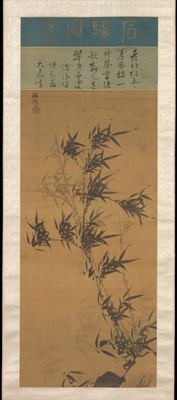
In the pictureBamboo stalks and leaves, swept to one side by the wind, cut diagonally across the picture. The leaves in front are painted in dark ink and those behind in pale ink, creating depth within the wind. The dark panel at the top carries text written in gold, with an inscribed poem attached below it. The only colors are ink, gold and the natural tone of the silk.
BackgroundYi Jeong (1541–1626), whose pen name was Taneun, was a member of the royal family descended from King Sejong. He is ranked as the finest painter of bamboo in the whole Joseon dynasty, and a story is told that he kept painting even after injuring his arm during the Imjin War (Japanese invasions of Korea). Bamboo, straight and hollow, symbolizes the integrity of the scholar, and wind-blown bamboo, which sways but does not break, stands in particular for steadfastness through hardship.
Puzzle tipAn ink-painting puzzle is solved by the direction of the brushstrokes rather than by color. Because the leaves all point the same way, matching a leaf piece's direction narrows down where it goes. With so many pieces of bare silk, 300 pieces is hard; 100 pieces is about right. The inscription at the top is easy to sort by the strokes of its characters, so it is a good part to finish first.
- Artist
- Korean, 1541–1626
- Period
- Joseon dynasty (1392–1910)
- Culture
- Korea
- Classification
- Paintings
- Medium
- Hanging scroll; ink on silk with gold on colophon
- Dimensions
- 115.6 x 53.3 cm
- Credit line
- Mary Griggs Burke Collection, Gift of the Mary and Jackson Burke Foundation, 2015
Source: The Metropolitan Museum of Art ↗
In these collections: Seollal Korean Painting Puzzles
Stories about this work
- How to Print and Cut a Printable Puzzle Cleanly, from Paper to Cutting Order
Print printable puzzles on heavy 120–160g A4 paper at 100% size, in color, single-sided. A guide from choosing paper to print settings and the order of cuts.
- Online Jigsaw Puzzles vs. Printed Puzzles: When Is Each Better?
Solve it on screen, or cut it out of paper? If you can enjoy the same painting both ways, there is no need to choose.
- How to Choose a Jigsaw Puzzle Difficulty (24 vs 48 vs 100 vs 300 Pieces)
Choosing difficulty by piece count alone often goes wrong. A practical guide to picking a level that also weighs image complexity and color contrast.