How to Write an Art Appreciation Essay: Four Steps That Start with What You See, Plus an Example
Published · updated
Sit down in front of a painting to write about it, and it is easy to get stuck at “It’s beautiful” or “It was impressive.” That happens because you are trying to write the feeling first. Change the order and start with what you can see, and you will find you have things to say. Here are the four steps taught in art classes as Feldman’s method of art criticism, laid out as the order for writing an essay.
What are Feldman’s four steps of art criticism?
They are an order for looking at a work of art, set out by the American art educator Edmund Burke Feldman. They appear in art textbooks and are a common framework for appreciation essays. The key is to put judgment last.
| Step | What you do | Question to ask yourself |
|---|---|---|
| 1. Description | Write down what you see | What is there, where, and in what color? |
| 2. Analysis | Look at how it is put together | How are the color, line, brushwork and composition arranged? |
| 3. Interpretation | Work out the meaning | What was the artist trying to say? |
| 4. Judgment | Write your own view | How do I see this painting, and why? |
Below, the four steps are written out one by one using a single painting by Van Gogh.
Before you start: four facts about the work
At the very top, note the title, the artist, the year it was painted and where it is now. On this site’s puzzle pages you will find them under the title and in “More artwork details.” For example:
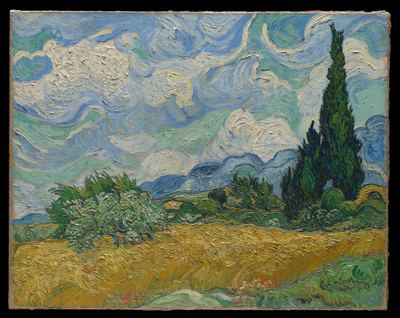
Wheat Field with Cypresses, Vincent van Gogh, 1889, The Metropolitan Museum of Art, New York
Step 1, description: write down what you see
Hold off on judging and simply list what is in the painting. Decide on an order, top to bottom or front to back, and scan the picture that way so you do not miss anything. Write down what is there, where it is and what color it is.
- In the foreground, a golden wheat field bends in the wind.
- On the right, two dark blue-green cypresses rise toward the sky.
- Behind, violet hills lie low, and white clouds swirl across the sky.
- There is not a single person.
Step 2, analysis: look at how it is put together
Look at color, line, brushwork and composition. This is the step where you ask why it looks the way it does.
- The color divides into large areas: yellow (the wheat), green (the bushes), blue (the sky) and dark blue-green (the cypresses).
- The brushstrokes run in different directions in different places. The wheat lies sideways, the cypresses shoot upward, and the clouds curl round.
- So the whole picture looks as if it is swaying in the same wind.
Step 3, interpretation: think about what it is saying
Using what you found in steps 1 and 2 as evidence, make a guess at what the painting means. This is a good place to read about the work and add one piece of background.
- Van Gogh painted this landscape in 1889, while staying at the asylum in Saint-Rémy in the south of France, and wrote to his brother Theo that it was the best of his summer paintings.
- In the south of France the cypress is a tree planted in cemeteries, so it can call death to mind, but Van Gogh said he found its shape beautiful.
- Although it was painted by an artist living in an asylum, the landscape looks strong rather than gloomy. That is probably because of the moving brushwork.
Step 4, judgment: write what you think
Only at the end do you write your feelings and thoughts. If you tie them to what you noticed earlier, they become much more specific than “I liked it.”
- At first I thought it was just a country landscape, but when I followed the direction of the brushstrokes, the whole painting seemed to make the sound of the wind.
- Once I knew it was painted during a time of illness, it felt more like a painting trying to hold on to living things.
Put them together and you have an essay
Join one or two sentences from each step and you have a short essay.
Van Gogh’s Wheat Field with Cypresses (1889) shows a golden wheat field bending in the wind, two dark blue-green cypresses rising into the sky and swirling white clouds. There is not a single person in it. Look closely and the brushstrokes run in different directions, sideways in the wheat, upward in the trees and round in the clouds, so the whole picture seems to sway in the same wind. Van Gogh painted it while he was at the asylum in Saint-Rémy and is said to have written to his brother that it was the best of his summer paintings. At first I thought it was an ordinary country landscape, but as I followed the brushstrokes I seemed to hear the wind. Even though it was painted during a time of illness, it is so full of energy that it feels as if the artist was trying to hold on to living things.
If you need a longer essay, expand steps 1 and 2. The more you see, the richer your interpretation and opinion will be later on. If you need to cut it down, shorten step 3 to a single sentence.
The longer you look, the more you have to say
The biggest reason an essay stalls is that the writer did not look at the painting for long. Put a painting together as a puzzle and you end up having looked at every corner of it, because you study each piece one by one. In Wheat Field with Cypresses, the direction of the brushstrokes is something you notice without trying as you assemble it. If you are struggling to write down what is in a painting, try solving it as a puzzle first.
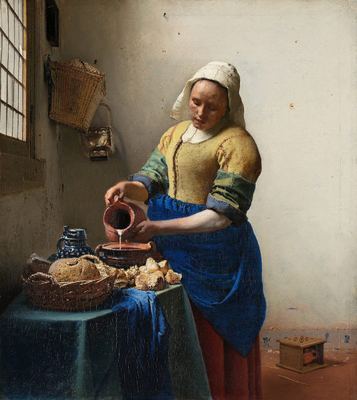
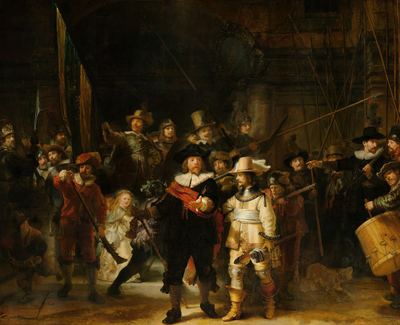
Simple questions make good raw material for steps 1 and 2: What caught your eye first? What three colors can you find? Which part was hardest to put together? For a first essay, start with a painting that has one figure and a few clear objects, such as The Milkmaid. Once you are used to it, move on to a painting full of people, such as The Night Watch. There is more on why a puzzle changes the way you see a painting in why a painting looks different once you solve it as a puzzle.
Frequently asked questions
In what order should I write an art appreciation essay?
The basic order has four steps: write down what you see in the painting (description), look at how its color and composition are put together (analysis), think about what the artist was trying to say (interpretation), and finally write your own thoughts and feelings (judgment). This is the order taught in art classes as Feldman's method of art criticism.
Can you show an example of Feldman's four steps?
Using Van Gogh's Wheat Field with Cypresses: description, 'there is a golden wheat field, two dark green cypresses and swirling clouds'; analysis, 'the brushstrokes run in different directions, so the whole picture seems to sway in the same wind'; interpretation, 'it looks full of energy even though the artist painted it while staying at an asylum'; judgment, 'following the brushstrokes, I felt I could hear the wind.'
Can I copy the museum's description of the painting into my essay?
You can use the basic facts (title, artist, date, collection) and a little background, but copying the commentary word for word will not make it your essay. Read the commentary, close it, write what you saw in your own words, and say where you got any facts you borrowed.
How do I choose a painting to write about?
Pick one with plenty to look at for a long time. Paintings with clear figures or objects and large, distinct areas of color are easier to write about. A painting you have already put together as a puzzle is one you have seen in every corner, so your description comes out far more specific.