Planning a 40-Minute Activity with Paper Painting Puzzles and Art Worksheets, for Classrooms, Senior Centers and Home
Published
Doing a painting puzzle on paper takes one more round of preparation. You have to print it, cut it, and decide what to do once it is finished. This post sets out how to plan a single 40-minute activity around a printed puzzle and an art worksheet, with a timetable and guidelines for choosing paintings, so it works in a kindergarten or elementary classroom, a senior center program or a weekend at home.
One note first. The printable sheets and worksheets described here are currently on the Korean edition of this site only. The timetable, the way of choosing paintings and the worksheet questions below do not depend on them, so you can still use the plan with your own printout of a painting.
What is in one printable sheet
Each painting has a two-page PDF. Page 1 is the original image for looking at, and page 2 has the same image with dotted cutting lines drawn over it. The lines form a straight grid, so all you have to do is cut straight with scissors, and depending on the painting’s proportions it comes out to 21 to 27 pieces. Nobody has to cut jigsaw shapes, so even children in the first years of elementary school can cut the pieces on their own.
The trick is to print page 1 separately. It becomes the finished picture that sits beside the table while people assemble, and afterward you can pin it up next to the worksheets. Paper and print settings (color, actual size at 100%, single-sided) are covered in detail in the printing guide. The thicker the paper, the less the pieces curl and the easier they are to fit.
Choosing a painting by who you are doing it with
The test for choosing a painting is not so much age as whether there is something in it you can name at a glance. If someone can pick up a piece and say “this is a sunflower petal” or “this is foam on the wave,” it is easy to find where it goes.
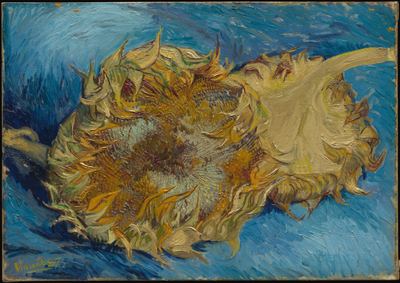
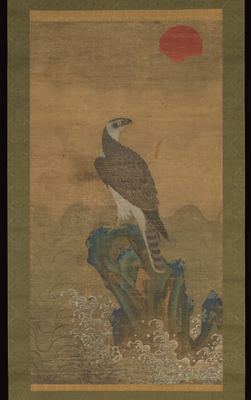
- Kindergarten and grades 1–2: paintings that divide into broad areas of color, where one color clearly serves as a guide, like the yellow of Sunflowers, the blue and white foam of Hokusai’s wave, or the red sun in Hawk at Sunrise.
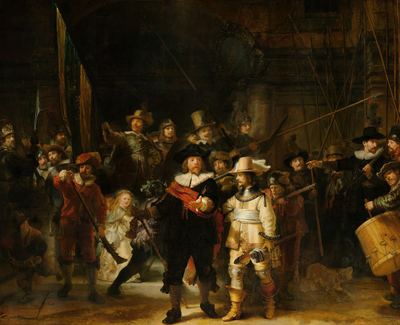
- Grades 3–6: paintings with several people and a scene. When there is plenty to talk about, who is doing what, as in The Night Watch, the worksheet questions come alive.
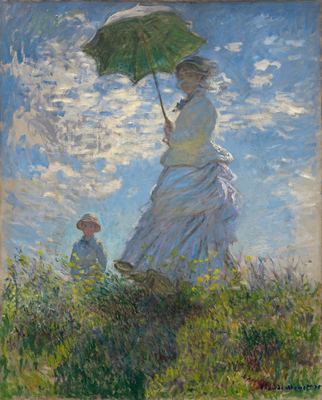
- Seniors: well-known masterpieces. With a painting most people have seen somewhere before, like Woman with a Parasol - Madame Monet and Her Son, the conversation (“I’ve seen this somewhere…”) starts before the puzzle is done.
A 40-minute timetable
| Time | Activity | What you need |
|---|---|---|
| 0–5 min | Look at page 1 (the original) and say what is in the painting | Printed page 1 |
| 5–15 min | Cut page 2 along the dotted lines | Scissors, an envelope or plate for the pieces |
| 15–30 min | Assemble, starting with the edge pieces | A large table |
| 30–40 min | Fill in the worksheet and each share one answer | Worksheets |
With a class that is not yet good with scissors, or with people who find using their hands difficult, the leader cuts the pieces in advance and 25 minutes go to assembling. Handing out each set of pieces in its own envelope keeps them from getting mixed with another painting. If there are four groups, choose four paintings, give each group a different one, and let them swap when they finish.
What the leader can say while people assemble
A paper puzzle does not click into place the way it does on a screen, so a word from the leader does the job of a hint.
- At the start: “Shall we collect the pieces with a straight side first?” Doing the edge first gives you a frame.
- When someone is stuck: “What color is on that piece? Let’s find where that color is in the original.” This is why page 1 sits beside the table.
- Near the end: “The pieces left are all a similar color, aren’t they? Look at which way the brushstrokes go.” Wide areas like sky or wall are what is left at the end.
It is better not to make it a race. Groups that finish first can simply get their worksheets first.
Ten minutes of worksheet after the puzzle
There are two worksheets. The children’s version asks: What caught your eye first? What three colors did you find in the painting? Which part did you put together first, and which was hardest? If you stepped into the painting, where would you like to stand? What new title would you give it? The version for seniors and adults asks: What season or time of day is it in the painting? What place or memory does the painting bring to mind? What did you notice for the first time while putting it together? Who would you like to show this painting to? None of these questions has a right answer, so they work with any painting.
Because the puzzle comes first, the answers are specific. Someone who has looked at every piece does not just say “the sky.” They say “the top right is bluer.” Why a puzzle makes you look at a painting for longer is covered in why a painting looks different once you solve it as a puzzle.
Mixing paper and screen
Next session, open the painting you did on paper on a screen at the next piece count up. Comparing how different the same painting feels becomes an activity of its own. The online puzzles open with just the address and no sign-up, and progress is saved on that device, so you can pick up where you left off next time. The differences between paper and screen are in online vs. printed puzzles, and tips on piece counts for younger children are in a child’s first jigsaw puzzle.
Frequently asked questions
Are the printable templates and worksheets available in English?
For now, the printable page and the worksheets are on the Korean edition of the site only. Each painting's PDF is two A4 pages: page 1 is the original image for looking at, and page 2 is the same image with dotted lines for cutting it into 21 to 27 pieces.
Which paintings can the worksheet questions be used with?
The two worksheets (one for children, one for seniors and adults) are not tied to any particular painting. Their questions work with any picture; you only need to write in the title. The full list of questions is in this post.
How should the time be divided in a 40-minute activity?
The basic plan is 5 minutes looking at the painting, 10 minutes cutting, 15 minutes assembling, and 10 minutes for the worksheet and talking. With children who are not yet good with scissors, cut the pieces in advance and give 25 minutes to assembling.