Not Royal, Yet Remembered in Stone: An Egyptian Vizier, Nurse, and Mason
Published
The inscription carved in black stone calls her “the nurse Sitsnefru.” Not a queen, not a princess, but a nurse left behind a statue bearing her own name. The Egyptian Art section has many statues of kings and queens, but it also has four statues like this one, of people who were not royal: a vizier, an overseer of stonemasons, a nurse, and one person known only by name.
| Work | Status | Material | Credit line |
|---|---|---|---|
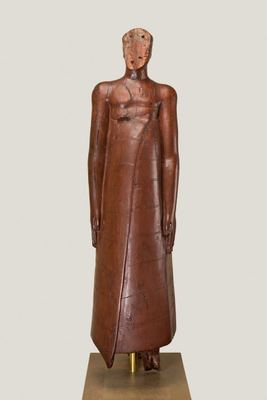
| Statue of the Vizier Iuy | Vizier | Wood | Rogers Fund, 1923 |
| Statue of the Overseer of Stonemasons Senbebu and Family | Overseer of stonemasons | Sandstone | Dodge Fund, 1956 |
| Statue of the Nurse Sitsnefru | Royal nurse | Gabbro or diabase | Rogers Fund, 1918 |
| Upper part of a statue of Iqer | Known only by name | Limestone with traces of color | Edward S. Harkness Gift, 1926 |
The vizier in a long robe
 Solve this painting as a puzzle → about 5 minutes on Easy
The Statue of the Vizier Iuy is a wooden figure standing with both arms lowered, dressed in a long robe that reaches his ankles. In Egypt the vizier was the highest office after the king, and the long robe was the vizier’s formal dress. Statues that show that attire in full are rare.
The vizier was not royal, but the position oversaw the whole administration of the country. Wood is easier than stone for carving a slender, elongated body, which is how proportions like these come about. Nearly 90 centimeters tall, this statue conveys high rank through its long body, small face, and the expressiveness typical of wood carving.
A mason’s family seated on one stone
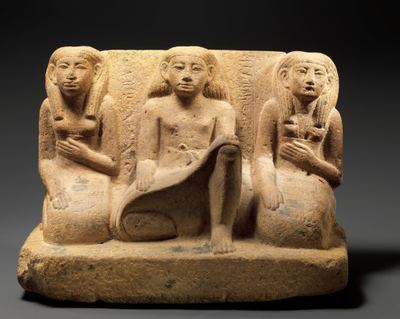
The most unusual of the four is the Statue of the Overseer of Stonemasons Senbebu and Family. One man and two women sit side by side on a single block of sandstone. According to the inscription, the figure in the middle is the overseer of stonemasons Senbebu, and those on either side are his family.
It is rare because it is a family statue from the artisan class, not of a king or high official. It is said that the overseer of stonemasons may have made his family statue himself. Imagining that a man who supervised stonework may have picked up the chisel for his own family makes the statue look a little different. Carving the family together on one stone probably reflects a wish to stay together even after death.
The standing of a nurse
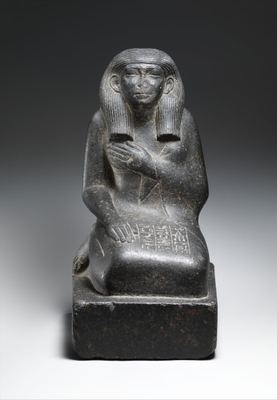
The Statue of the Nurse Sitsnefru is a seated figure of a woman carved in black stone. In Egypt, a nurse who raised the children of the king or nobles was treated with considerable respect and could set up a statue in her own name.
In other words, it was a position recognized well enough, beyond the work of caring for a baby, to leave a statue behind. Fewer seated statues of women survive than statues of men, so this one is also a valuable record of the clothing and wig styles of Middle Kingdom women. Hard black stones like gabbro or diabase were difficult to work, so the very choice of such stone was a sign of wealth.
Iqer, of whom only a name remains
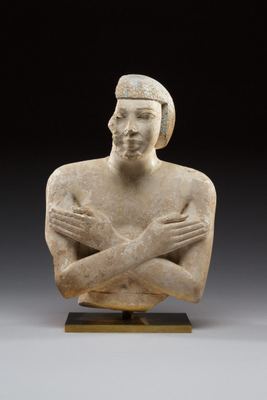
The Upper part of a statue of Iqer is a small sculpture missing everything below the waist. The pose, with the arms crossed in front of the chest, is linked to the hope that the dead would come back to life in the same form as Osiris, god of the underworld.
All we know about this person is the name. Thanks to the carved name, we know only that this is a statue of Iqer; no title or story survives. Even so, that name has crossed 3,900 years to reach us.
Statues were not for kings alone
Set the four side by side and it becomes clear that in Egypt statues were not reserved for royalty. The vizier, holder of the highest office in the land, an overseer of stonemasons from the artisan class, and a woman who worked at court all left statues carved with their own names.
In size or splendor they cannot compare with a king’s sphinx or temple reliefs. What they have instead is a name. Placing them next to the royal sculptures whose names were lost is a curious experience: kings who lost their names and commoners who kept theirs, from the same period, standing in the same museum.
Sort by the color of the material first
All four are compositions with a single figure at the center against a plain background, which can look daunting, but the color and texture of each material are distinctly different, and that helps. Reddish-brown wood, gray sandstone, black gabbro, limestone with traces of paint: start by separating these. When three people are seated, as in Senbebu’s family statue, first pick out the outlines of the man in the middle and the women on either side separately. Hieroglyphs on a kilt or back pillar are aligned in columns or rows and make good reference points. In a sculpture cut off below the waist, like Iqer’s statue, the break is a sharp boundary that makes positions easy to guess. Easy (about 24 pieces) to Normal (about 48) is the right size, and with several figures, as in the family statue, even Hard (about 100) works.
The kings wanted to be remembered through temples and pyramids; the vizier, the nurse, and the overseer of stonemasons staked their names on a single small statue. The conventions these statues follow are covered in Conventions of Egyptian statues, and tips for solving the whole section in the Egyptian art puzzle guide. They could not have known that statues set up in their tombs would be pieced together again by strangers’ hands 3,900 years later, but their wish to leave a name behind has reached quite far.