Why It Pays to Do the Face Last in a Portrait Puzzle
Published · updated
Open a portrait puzzle and your hand goes to the face first. That is natural, since the subject of the painting is there. But assemble the seventeen or so figure paintings in the European Paintings category, and you find that the habit of grabbing the face first eats up a good deal of time. Five of them are palm-sized miniature portraits painted on ivory or vellum and the rest are oil paintings, but either way the places where you get stuck are clearly different from landscapes or still lifes.
The face is smaller than you think
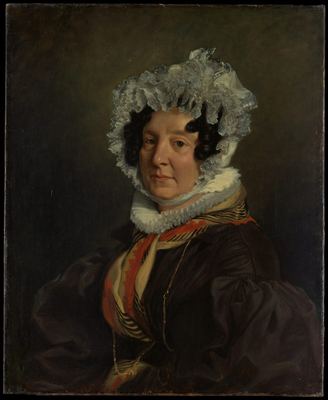 Solve this painting as a puzzle → about 5 minutes on Easy
If you measure just the face in Madame Henri François Riesener by eye, it is a little over a fifth of the width and a sixth of the height. That is only 3 to 4% of the picture. On Easy it is divided 4 across by 5 down, into 20 pieces, but only two or three pieces show skin tone, four at most. The other sixteen or more are the bonnet, the clothing and the dark background.
Raising the piece count does not change the proportion. On Expert (16 × 19, around 304 pieces), the face pieces increase to about ten, but that is still only about 3% of the whole. The smaller the figure, the smaller the share. In the full-length Self-Portrait with a Harp, the face is around 1% of the picture.
Save the easy pieces
There is no reason to rush the face. Skin-tone pieces are few and their color stands out, so even if a handful are left at the end they are quick to find. Dark clothing and background pieces are the opposite. The more of them are left at once, the harder they become to tell apart. Whittling down the hard part first makes the total time shorter.
Filling in the surroundings first has another advantage: the place for the face is left as a hole. The number of empty spaces surrounded by the bonnet, the hairline and the collar becomes fixed. The board on this site has grid lines dividing the spaces, so you can see this at a glance. Knowing the remaining pile is all face, you only have to match the positions of the eyes, nose and mouth to finish.
Where each painting gets stuck
What gives you trouble in Madame Riesener is not the face but the lower half. The dark brown background and the deep-colored clothing run together in almost the same color. The only thing to rely on there is the striped shawl flowing from the neck down to the chest. Gather just the pieces that show stripes, and a band running downward stands up first. Sort the remaining dark pieces into clothing if the brushwork has a sheen, and background if it is flat.
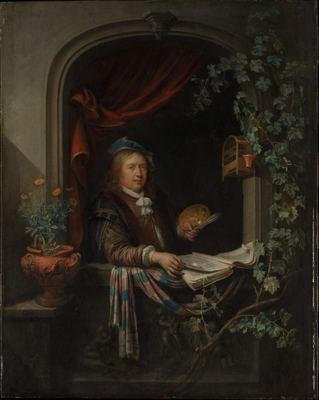
Self-Portrait is the opposite. Inside a stone window frame are packed a red curtain, a grapevine, a flowerpot, a birdcage and a palette, so there are almost no sections that are only dark. The face is about 1% of the picture, so even on Expert it takes just three or four pieces. With a painting like this, there is no need to try to save the face; start with the objects and the face will be left for last on its own.
Oval paintings create another kind of headache. In Boy with a Black Spaniel, the area outside the oval is a dark ground, so the four corners and the edge pieces resemble one another. Whether the curve of the oval’s border is visible is the way to tell them apart. Join the curved pieces first, and the pile for the outer area shrinks all at once.
The eye falls across two pieces
The grid that cuts the pieces does not care where the eyes and mouth are. It is common for one eye to be split half and half across two pieces, so searching for “the piece with the whole eye” can take a long time. It is faster to assume each piece has one small clue, such as the tip of an eyebrow, the white highlight in the pupil, the shadow of a nostril or the corner of the mouth.
If light falls from only one side of the painting, use brightness as your guide. In Young Woman with a Pearl Necklace, light touches only the face, the chest and the hands. Lay out the face pieces in order of brightness, and the lit forehead and cheeks separate from the shaded side of the chin. If you are still unsure, use this site’s indicator. When a piece gets close to its place, its border turns thick orange, so bring it next to a candidate space and see whether the color changes.
For sorting, adapt the order for sorting pieces to portraits. Skin-tone pieces like the face and hands are the most distinct and also the fewest. Pieces of highly saturated or glossy fabric come next, and the dark, uniform background pieces are left until the end. Portraits are a type where sorting by color works well, but the background pile alone will eventually need to be divided once more by its gradation of light and dark.
Fit the last piece and your eyes meet
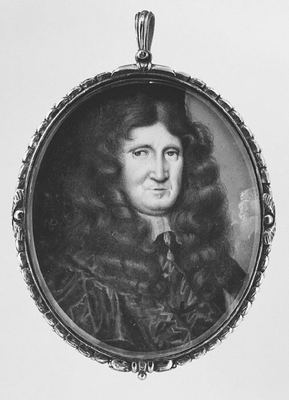
When you finish Sir Henry Blount, a strange moment comes. The original is a portable miniature a little over 7 cm tall. After enlarging that small face, painted in the 1660s, to fill the screen and examining it piece by piece, you come face to face with the finished face. Had you passed it by in a museum, you would never have had this experience. Leaving the face until the end is also a way of saving this moment.
Frequently asked questions
Should I start a portrait puzzle with the face?
It is better to leave the face until the end. The face takes up only 3 to 4% of the picture, and skin-tone pieces are few and stand out, so they are quick to find even when left for last. Dark clothing and background pieces, by contrast, get harder and harder to tell apart when many are left at once.
Where do portraits get stuck the most?
It depends on the painting. In Madame Riesener it is the lower half, where the dark brown background runs into the deep-colored clothing; in the oval Boy with a Black Spaniel, it is the dark ground outside the oval. In paintings where light falls from only one side, laying out pieces in order of brightness is a good guide.
I can't find the piece with the whole eye in it.
The grid that cuts the pieces does not take the position of the eyes and mouth into account, so it is common for one eye to be split half and half across two pieces. It is faster to search using small clues such as the tip of an eyebrow or the white highlight in the pupil.