16 Must-See Paintings at the Rijksmuseum in Amsterdam
Published
It is the place where you go to see Rembrandt’s The Night Watch and end up standing longer in front of a small Vermeer. This is the Rijksmuseum on Museum Square in Amsterdam. Because it is the national museum of the Netherlands, in Korean it is also called the Amsterdam National Museum of Art. The present building opened in 1885, and it reopened in 2013 after nearly ten years of construction work. The collection numbers about a million objects, but most travelers come to see the paintings of the 17th-century Dutch Golden Age.
The Rijksmuseum has made images of its out-of-copyright collection free for anyone to download. Thanks to that, we were able to turn 16 of its major works into puzzles and gather them in the Rijksmuseum collection. They were chosen the same way as the 12 must-see paintings at the Metropolitan Museum of Art in New York, and the table below is the list.
| Work | Artist | Date | Size (cm) |
|---|---|---|---|
| The Night Watch | Rembrandt | 1642 | 363 × 437 |
| Syndics of the Drapers’ Guild | Rembrandt | 1662 | 191.5 × 279 |
| The Jewish Bride | Rembrandt | ca. 1665–69 | 121.5 × 166.5 |
| Self-portrait as the Apostle Paul | Rembrandt | 1661 | 91 × 77 |
| The Milkmaid | Johannes Vermeer | ca. 1660 | 45.5 × 41 |
| The Little Street | Johannes Vermeer | ca. 1658 | 54.3 × 44 |
| Woman in Blue Reading a Letter | Johannes Vermeer | ca. 1663 | 46.6 × 39.1 |
| The Love Letter | Johannes Vermeer | ca. 1669–70 | 44 × 38.5 |
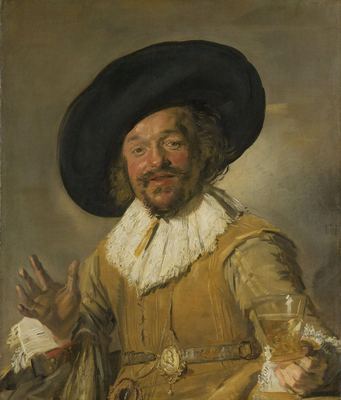
| The Merry Drinker | Frans Hals | ca. 1628–30 | 81 × 66.5 |
| The Feast of Saint Nicholas | Jan Steen | 1665–68 | 82 × 70.5 |
| The Merry Family | Jan Steen | 1668 | 110.5 × 141 |
| A Mother’s Duty | Pieter de Hooch | ca. 1660–61 | 52.5 × 61 |
| Winter landscape with skaters | Hendrick Avercamp | ca. 1608 | 77.3 × 131.9 |
| The Windmill at Wijk bij Duurstede | Jacob van Ruisdael | ca. 1668–70 | 83 × 101 |
| The Threatened Swan | Jan Asselijn | ca. 1650 | 144 × 171 |
| Self-portrait | Vincent van Gogh | 1887 | 42 × 34 |
There is a reason the sizes are listed too. The Night Watch is more than 4 meters wide, while all four Vermeers measure around 50 centimeters on a side. When you stand in front of paintings you have only seen on a screen, this difference is the first thing that surprises you.
From The Night Watch to the Apostle Paul: thirty years of Rembrandt
 Solve this painting as a puzzle → about 5 minutes on Easy
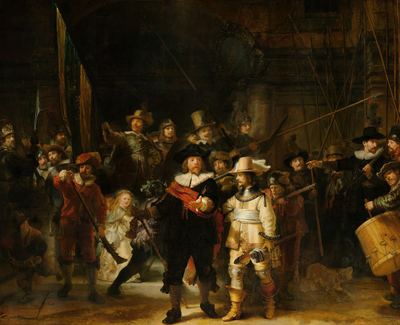
The Night Watch is a group portrait that Amsterdam’s arquebusiers’ civic guard commissioned to hang in their own hall, completed in 1642. It shows the moment Captain Frans Banninck Cocq, wearing a red sash, and his lieutenant in yellow lead the company out. Group portraits usually lined people up side by side, but Rembrandt turned his into the movement just before setting out. Despite the title, it is a daytime scene. The name came about because it looked like a night painting after the varnish darkened. When it was moved to the Town Hall in 1715, its edges, especially on the left, were cut off to fit the wall. Since 2019, research and restoration work has been carried out in front of visitors, so you may see the work in progress behind a glass partition.
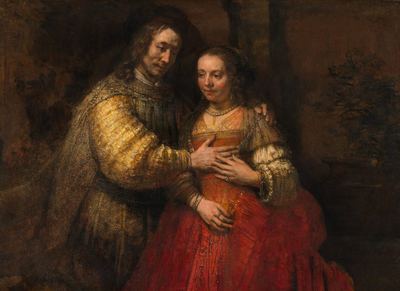
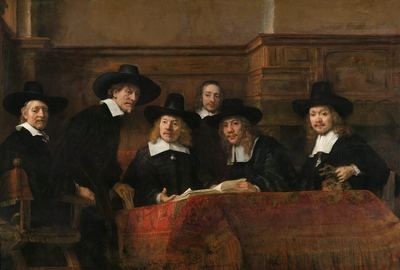
Twenty years later came Syndics of the Drapers’ Guild, which is known as the last group portrait Rembrandt painted. The syndics seated around the table all look up at us at once, giving the feeling that you have just walked into a room in the middle of a meeting. In the late The Jewish Bride, the man’s golden sleeve is built up thickly with brush and palette knife. There is a well-known anecdote that Van Gogh could not bring himself to leave this painting for a long time. Follow the four works through to Self-portrait as the Apostle Paul, painted after his bankruptcy, and you can see thirty years of Rembrandt.
Four Vermeers in one museum
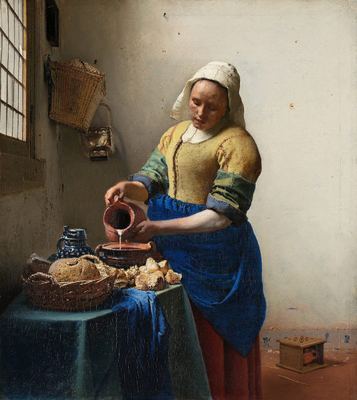
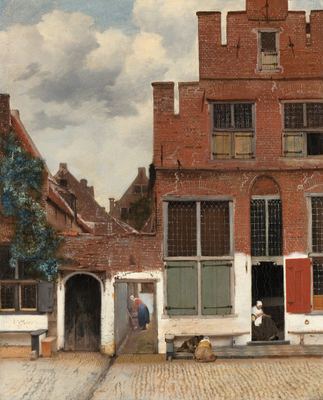
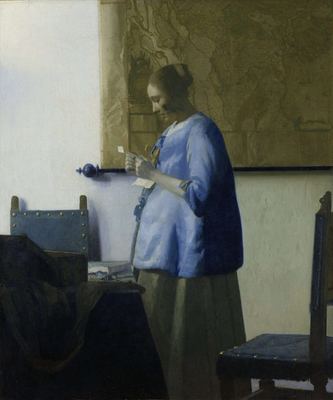
Vermeer left only thirty-some paintings in the world, and four of them are in this one museum. They are The Milkmaid by the kitchen window, The Little Street, which paints a street in Delft, Woman in Blue Reading a Letter, in which a woman reads a letter in front of a map, and The Love Letter, which looks in through a doorway. The Rijksmuseum bought The Milkmaid in 1908, and The Love Letter was stolen during an exhibition in Brussels in 1971, its canvas cut out with a knife, before it was recovered and restored. From The Little Street of around 1658 to The Love Letter of around 1669–70, if you place these four in the order in which Vermeer painted eight of his works, they slot in between the four held by other museums.
The drinker raising a toast and the crying child
There are paintings from the same period that would be a shame to miss if you only saw Rembrandt and Vermeer. Frans Hals’s The Merry Drinker is painted in quick strokes that make no attempt to hide the brushwork, catching the single moment just before a toast. Jan Steen’s The Feast of Saint Nicholas puts a child laughing over the presents received on the evening of December 5 and a child crying over finding only a birch rod in his shoe in the same room. The same painter’s The Merry Family is a proverb painting of children who copy the adults and put a pipe in their mouths. Pieter de Hooch’s A Mother’s Duty shows a Dutch home of Vermeer’s time in a different way.
The land, water and sky of the Netherlands
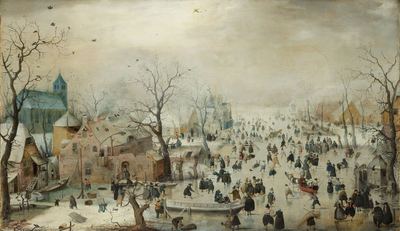
Hendrick Avercamp’s Winter landscape with skaters shows crowds of people at play on a frozen waterway. The figures are small and many, so the longer you look, the more stories emerge. Jacob van Ruisdael’s The Windmill at Wijk bij Duurstede sets the horizon low so that the windmill seems to rise into the dark clouds. Jan Asselijn’s The Threatened Swan is the very first painting acquired by the Rijksmuseum’s predecessor.
Finally, Van Gogh. There is a separate Van Gogh Museum on the same square, but the Rijksmuseum also has a Self-portrait from his Paris years, in which he wears a gray felt hat. It is a small painting on cardboard, 42 × 34 centimeters.
The painting may not be in the gallery
Even major works are sometimes away because of loans or conservation. Checking on the object page of the Rijksmuseum’s website whether a work is currently on display will save you a wasted trip. The 17th-century highlights are gathered in and around the Gallery of Honour on the second floor, so if you are short on time, head up to the second floor first. If you plan to combine it with the Van Gogh Museum on the same day, book your entry times at both in advance so your schedule does not get tangled.
Save the browns of The Night Watch for last
Of the 16, the clearly colored The Threatened Swan and A Mother’s Duty make good first puzzles. Even cut into about 48 pieces, large masses like the swan’s white wings come together quickly. The Night Watch and The Jewish Bride have dark browns covering wide areas of the picture, so it is clear where you will get stuck. With The Night Watch, join the lieutenant in yellow and the captain with the red sash first, and fit the brown darkness together from the pieces left at the very end. Tips for handling large single-color areas are in the solid background strategy.
The time you spend in front of a painting in a museum is a few minutes at most. Even so, a painting you have once put together as a puzzle looks different during those few minutes. Your hands already know where the drummer was in The Night Watch, and where on the wall of The Milkmaid the nail marks were.
Frequently asked questions
Which paintings should I not miss at the Rijksmuseum?
The most famous is Rembrandt's The Night Watch, and Vermeer's The Milkmaid, The Little Street and Woman in Blue Reading a Letter, Rembrandt's The Jewish Bride and Frans Hals's The Merry Drinker are usually named alongside it. The highlights of 17th-century Dutch painting are gathered in and around the Gallery of Honour on the second floor.
Are the Rijksmuseum and the Amsterdam National Museum of Art the same place?
They are the same place. Rijksmuseum is the Dutch name, carried over into Korean as is, and translated by meaning it becomes National Museum of Art. The Van Gogh Museum is a different museum on the same Museum Square.
Why is The Night Watch called The Night Watch when it is not a night scene?
The varnish painted over the picture darkened over the years, and the name came about because it then looked like a night scene. In fact it shows a civic guard company setting out in daylight.